


Lamont's Data Center Hype

In early 2021, Governor Ned Lamont and then-DECD Commissioner David Lehman fast-tracked House Bill 6514. It was emergency-certified. No committee hearings. No public testimony. The House passed it 133-13. The Senate followed 29-5. Lamont signed it days later. Gotspace later billed it as making Connecticut one of the most affordable places in the country for Fortune 100 hyperscale data centers. Long-term exemptions from sales, use, and property taxes (20 years standard, up to 30 for larger investments), plus protection from any future financial transactions tax. Gotspace Data Partners publicly claimed they helped draft the incentives, worked extensively with Lehman and Lamont, and lobbied the bill through. Their own materials promised a New England Data Corridor, host agreements with Wallingford, Groton and others, and the first data center in 2023.
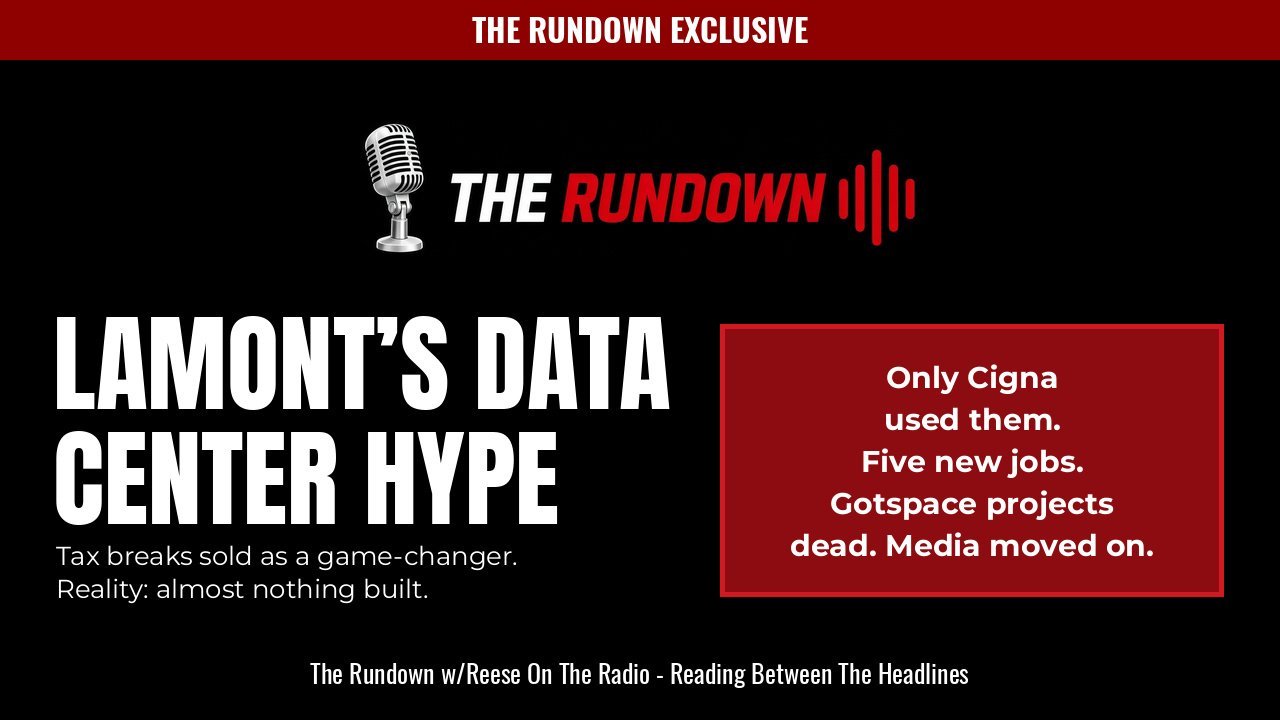
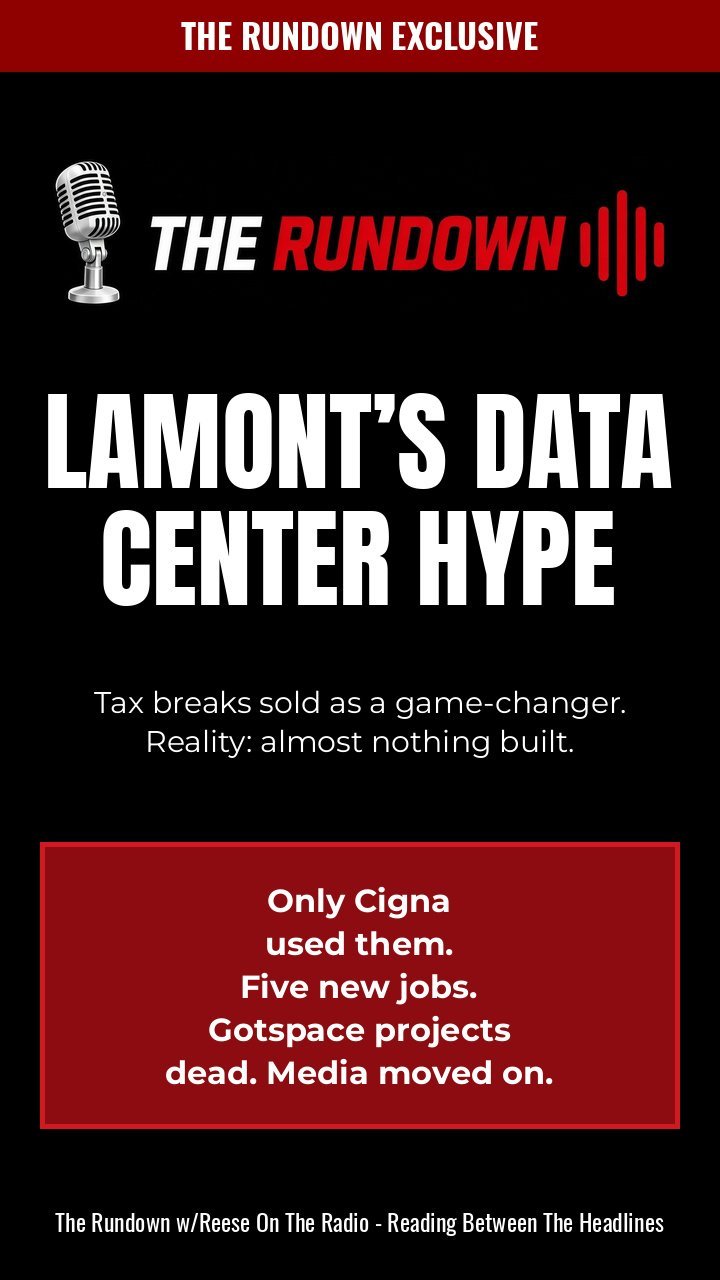
Five years later the results are thin. Only one company has used the program: Cigna, renovating an existing facility in Windsor. Reported investment roughly $863 million. More than $17 million in tax rebates. About five net new jobs. No contractual job requirement was attached. Gotspace’s promised corridor never arrived. The company fractured into lawsuits (including a highly inflated RICO complaint against former partners), towns pushed back, and the proposed campuses are tracked as inactive or withdrawn. High electricity costs—a structural Connecticut problem—were never solved by the tax breaks. Large data centers are power-intensive; utilities have noted they can drive up costs for everyone else through demand and infrastructure upgrades. Lamont has more recently criticized “energy-sucking” hyperscale projects while the 2021 incentives remain on the books.
This is the pattern that gets less sustained attention. The bill was sold with private developer input and emergency speed. The outcomes did not match the rhetoric. The company that claimed co-authorship of the package delivered none of the hyperscale build-out it advertised. Local host agreements substituted fees for traditional property taxes in places that signed them, but the projects largely stalled. Later reporting noted that the Cigna approval itself involved process shortcuts. Energy rates stayed high relative to national averages, undercutting the “most affordable” claim Gotspace used to tout the giveaway.
Media coverage has reported the limited results, the Cigna numbers, and later campaign criticism of the incentives. What has been thinner is sustained scrutiny of the original process, the gap between the Gotspace sales pitch that helped move the bill and the actual delivery, and the energy-cost reality that made the incentives largely ineffective. Diamantis circulating the old Gotspace press release does not create a new personal enrichment scandal for Lamont; it fits his broader, self-serving narrative while he seeks a pardon after a 21-count bribery and extortion conviction tied to school construction. The document itself is company PR. The underlying story is ordinary: fast-tracked tax policy with weak strings, private input, and results that fell short of the hype.
Connecticut ratepayers still face high power costs. Data centers that do arrive will add load. The 2021 package remains available. The question is whether the original claims about making the state competitive for hyperscale were ever realistic given the energy fundamentals, and why the mismatch between pitch and outcome received so little lasting examination.
Get The Rundown
Columns that read between the headlines, plus the full show weekdays 2–6 PM ET on WTIC NewsTalk 1080.